
The Rise of Club Field Hockey in the U.S.
COLORADO SPRINGS, CO — In 2018, Massachusetts’ Commonwealth Field Hockey League had 34 teams from 11 towns. By 2025, it had grown to 152 teams from 29 towns, with 2,584 girls participating annually.
That is more than four times as many teams in seven years and one concrete example of where field hockey is building momentum.
That momentum deserves attention. Beyond high school competition, field hockey has a network of community leagues, independently operated clubs and national tournaments that give athletes opportunities to learn, develop, and compete throughout the year.
USA Field Hockey’s club membership has grown to 320 clubs nationwide, up 19 percent from 268 six years ago and 55 percent from 207 in 2010. As the club network expands, more young athletes have a place to learn and compete, and college programs can connect with a wider pool of prospective student-athletes and the coaches who develop them.
Record Participation at National Events
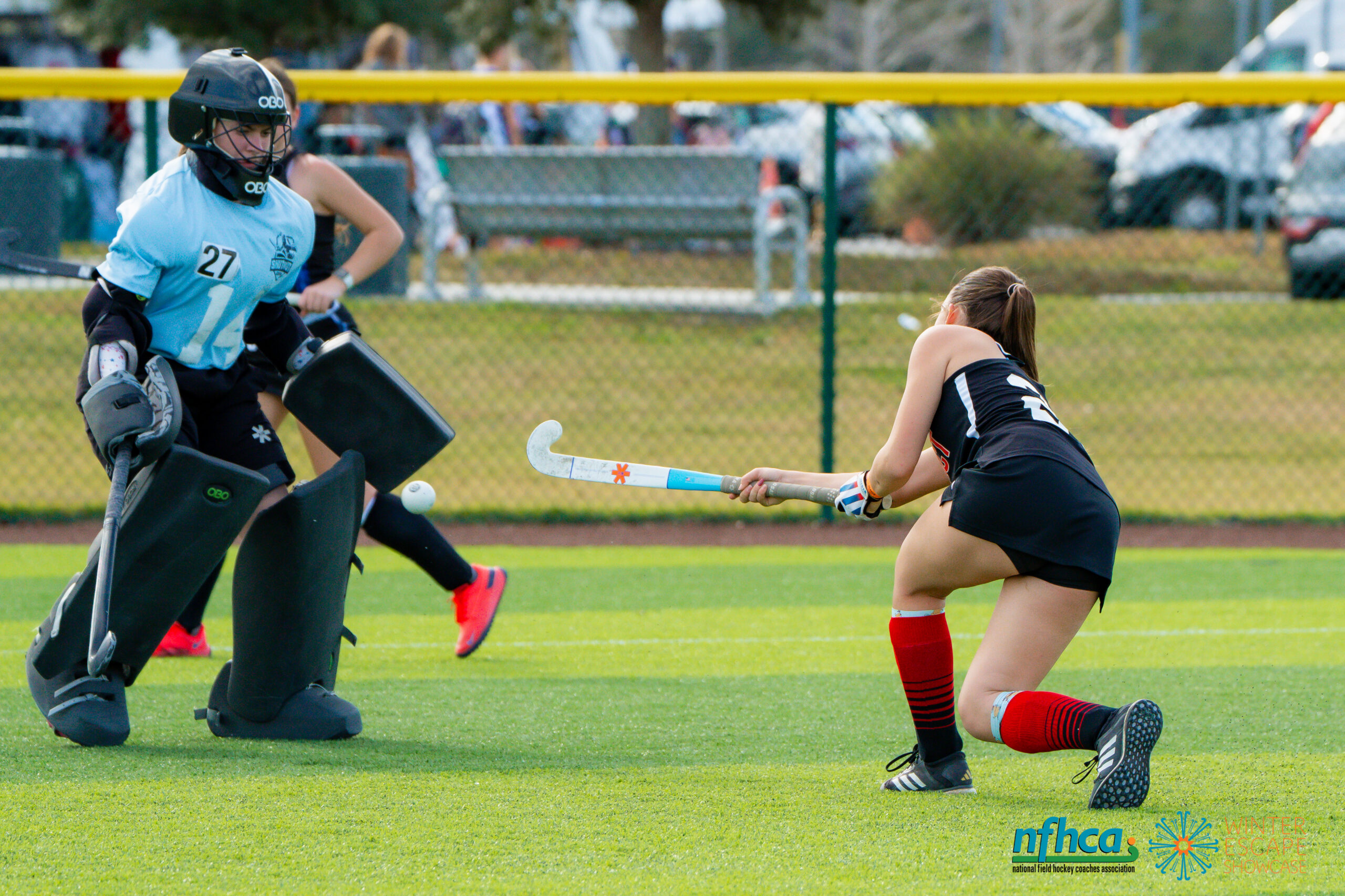
The National Field Hockey Coaches Association (NFHCA) Winter Escape Showcase takes place each January in Sanford, Florida, immediately following the NFHCA Annual Coaches Convention. The 2026 event brought together 108 club teams and more than 1,800 student-athletes. The showcase has been going strong for more than a decade. More than 200 college coaches from across all NCAA divisions attend annually to evaluate players in team competition and skill showcases.
Also in January, USA Field Hockey’s Sunshine Showcase drew 312 teams to the ESPN Wide World of Sports Complex in Kissimmee, Florida, making it the largest single event in the organization’s history. The outdoor showcase brings youth club teams from across the country to one venue, where college coaches can watch players from multiple regions compete.
USA Field Hockey also reported a record 954 team entries across its national indoor tournaments and festival. Indoor field hockey is a small-sided version of the sport played on a court with sideboards that keep the ball in play. The winter season serves youth and adult divisions. In 2026, youth participation included 252 U-14 girls’ and coed teams, 180 U-16 girls’ teams, and 205 U-10 and U-12 coed teams. In the same March update, USA Field Hockey reported that its overall membership had reached a record 30,410.
In June, 72 teams advanced through regional qualifiers to the National Field Hockey Club Championship in Virginia Beach, Virginia. The event brought together roughly 1,400 players, with 24 teams competing for a national title in each of the U-14, U-16, and U-19 girls’ divisions.
From winter showcases and indoor tournaments to summer national championships, the club calendar gives young athletes opportunities to develop beyond the school season and gives college coaches more chances to evaluate players throughout the year.
An Event Network Connecting Players and Colleges
The opportunities extend far beyond USA Field Hockey’s national events. Independent event organizers provide additional places for club teams to compete and prospective college players to work with and be evaluated by college coaches.
Performance Sport Events (PSE), which currently focuses exclusively on field hockey events, hosts more than 30 field hockey tournaments, showcases, and camps annually across the Northeast and mid-Atlantic regions, alongside youth leagues that provide opportunities to play throughout the year. PSE’s reach annually exceeds 25,000 athletes from the U-8 to U-19 levels. Its largest event, Shooting Star Thanksgiving, brings together 290 club teams over the Thanksgiving weekend in Richmond, Virginia. Most of its events sell out within just hours of opening registration.
Apex Field Hockey offers recruiting events tailored to different stages and interests, including its First Look Showcase for freshmen and sophomores, Spring National Showcase, and Division III Showcase. The LineUP uses a “Choose Your Coach” format, allowing athletes to select clinics with college coaches and programs they want to explore. Together, these providers give players more ways to develop and connect with colleges, while offering college coaches organized opportunities to identify prospective student-athletes.
Building the Game Closer to Home
National tournaments and showcases are one part of the picture. Community programs provide an entry point for younger athletes.
The Commonwealth Field Hockey League’s expansion illustrates that work. Founded by recreation leader and club co-owner Kim Carney, the Massachusetts league has grown through town-based programming. Its annual jamboree expanded from 12 teams serving fifth through eighth graders to 50 teams, with divisions reaching children in first grade.
The league offers a useful example of how local opportunities can build participation over time: introduce children to the game, give them a place to play and create additional levels of competition as they develop.
The high school-based pathway is also adding programs. The 2025–26 NFHS High School Athletics Participation Survey reported 1,813 schools sponsoring girls’ field hockey, up from 1,768 the previous year. That represents 45 additional schools, a 2.5% increase in one year, providing more places for girls to compete and pursue their interest in the sport.
When Player Interest Becomes a College Opportunity
College students today can play field hockey on 282 NCAA varsity teams and more than 100 college club teams. Fifteen NCAA Division II and Division III programs have launched since 2022, and one of those programs is already a conference champion.
Penn State Harrisburg began NCAA Division III play in fall 2024. When the college announced the program in 2023, athletic director Rahsaan Carlton cited years of interest from current and prospective students, the sport’s popularity in the region, a new multisport turf facility and the chance to compete in a conference that sponsored field hockey. In its third varsity season, Penn State Harrisburg defeated St. Mary’s (Md.) in a shootout on Nov. 7 to win its first United East championship and earn its first NCAA tournament berth.
John Carroll University launched its Division III varsity program in fall 2026 after a year of club play. Brian Polian, vice president of athletics, pointed to the university’s move to the North Coast Athletic Conference, which sponsors field hockey, and a recruiting opportunity. John Carroll was losing prospective students to schools where they could keep playing, and field hockey was already established in high schools in the regions where the university wanted to recruit.
At Curry College in Milton, Massachusetts, athletic director Vinnie Eruzione cited several years of growing interest from prospective students as a reason to add varsity field hockey. The Division III program will begin competition in fall 2027 and enter Conference of New England play in 2028.
For colleges considering which women’s sports to add, the place to start is with the students they already serve and the ones they want to reach. Local leagues show where young players are entering the sport, and clubs and showcases give college coaches a way to see those players compete as they develop. For John Carroll, Penn State Harrisburg, and Curry, adding field hockey gives prospective students one more reason to choose their schools.