A New Era: The 2026 Collegiate Field Hockey Coaching Changes
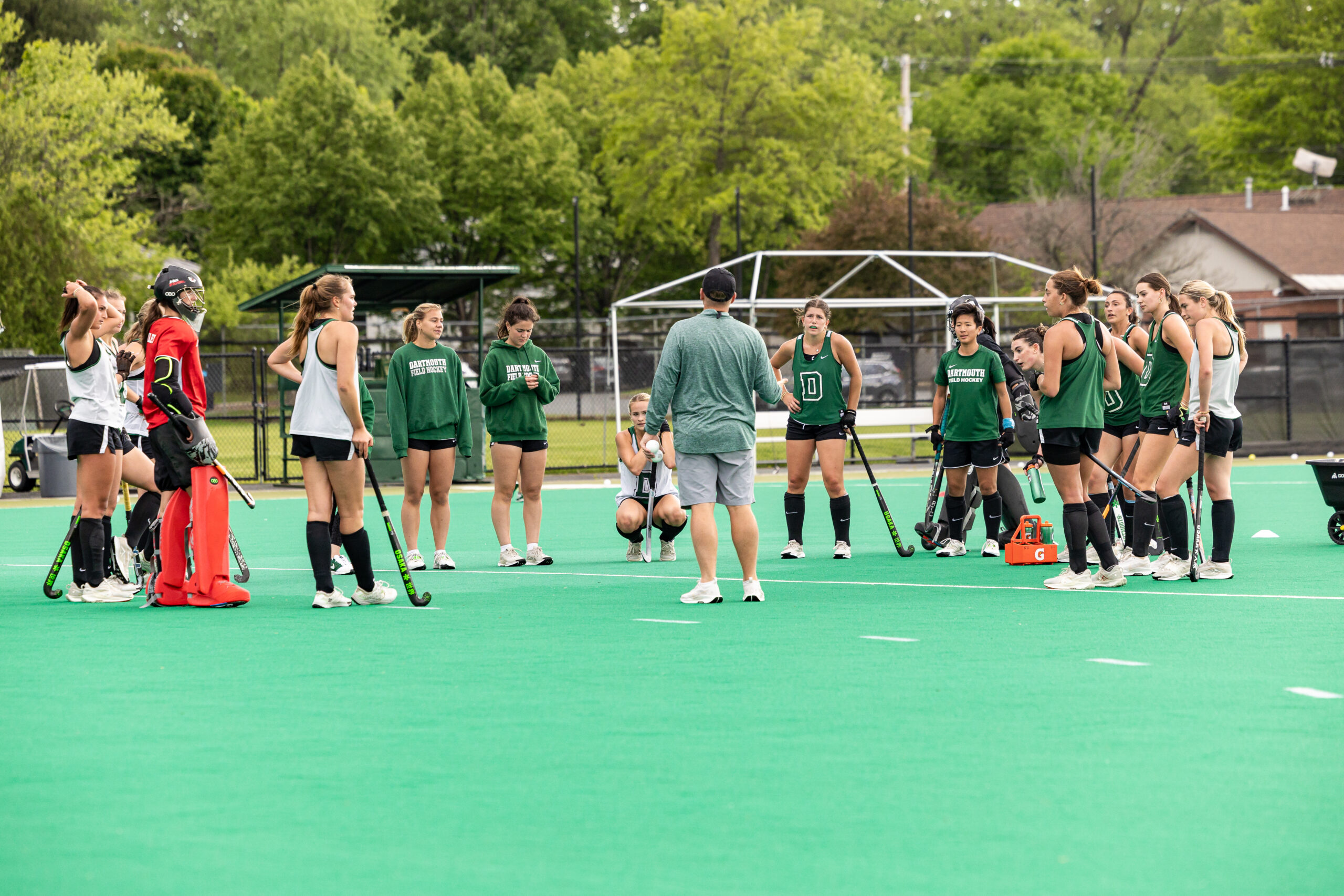
Photo: Dartmouth Field Hockey/Head Coach Jason Klinkradt and team
This article was updated on August 4, 2026, to include additional head coaching changes announced after its original publication.
COLORADO SPRINGS, CO – Every offseason brings change. A few familiar faces move on. A handful of rising assistants earn their first opportunity. A legendary coach steps away after decades on the sideline.
But the road to the 2026 collegiate field hockey season has been something different.
Since September 2025, 57 NCAA head coaching positions have changed hands across all three divisions—the largest coaching turnover the sport has experienced in many years. Even during the significant post-pandemic coaching movement ahead of the 2023 season, there were 46 head coaching changes, a number that seemed remarkable at the time. Three years later, the sport has surpassed that mark.
19 of those changes came in Division I, seven in Division II, and 31 in Division III. Even more telling, 33 of those 57 coaches are serving as NCAA head field hockey coaches for the very first time.
Behind every one of those coaching changes is a team navigating transition, a community welcoming new leadership, and a coach embracing one of the greatest privileges in the profession.
The numbers also tell another story.
This offseason marked the retirement of nine respected longtime leaders at Boston University, James Madison University, Michigan State University, University of California, Berkeley, University of New Hampshire, East Stroudsburg University, Alvernia University, Keene State College, and Skidmore College. Their departures created opportunities for new voices while reminding the field hockey community that every program is built upon those who came before.
There was also loss beyond the sidelines. Anna Maria College announced its closure following the academic year, while Division II institutions Lincoln Memorial and Mount Olive discontinued their field hockey programs this spring. Those decisions affected student-athletes, coaches, alumni, and communities who invested years and energy into building those programs, underscoring both the opportunities and challenges facing collegiate athletics today.
Yet amid the uncertainty, one theme has emerged: hope.
Building on What Came Before
For many new head coaches, taking over a program isn’t about starting over. It’s about honoring what exists while thoughtfully shaping what comes next.
Few understand that balance better than Sarah Shute, who returned to her alma mater after a successful tenure at MIT to succeed Boston University Hall of Fame coach Sally Starr.
“What excites me most about leading this program is coming back as an alum and building on the foundation that shaped who I am today and providing these student-athletes with a similar transformational experience,” Shute said.
Her biggest lesson during the transition wasn’t about systems or strategy.
“I’ve learned how vital it is to lean on the people around me—my staff, others in the department, and coaches in the NFHCA community. These relationships have made all the difference in my first few months in this new role. Knowing I don’t have to have all the answers, and leaning on those who do, is a real strength.”
That willingness to learn from others has become a common thread throughout this year’s new coaching class.
Culture Before Championships
At Penn State, head coach Hannah Prince arrives with championship aspirations, but her first priority wasn’t implementing a new strategy.
It was getting to know people.
“What excites me most about Penn State Field Hockey is the opportunity to build what comes next,” Prince said. “This isn’t just about a new chapter—it’s about creating a new standard, building unbreakable habits, and establishing the foundation for what is to come.”
She believes the strongest programs are built long before opening day.
“Stepping into this role, my top priority was getting to know the players individually and as a collective group. Transitions can feel extremely hectic and busy, but prioritizing the people was, and always will be, the most important thing.”
Prince also offered advice that will resonate with coaches beginning new chapters at every level.
“Leadership is not linear, and neither is leading a program. Every program is vastly different, so don’t hesitate to ask for help from colleagues at your new institution who have been there longer. Their knowledge can help accelerate your learning, give a different perspective, and help you build meaningful connections.”
Trust Is Built Every Day
At Dartmouth, new head coach Jason Klinkradt had little time for lengthy planning sessions before preseason arrived.
Instead, he let actions do the talking.
“What excites me most is the opportunity to build a culture where people can thrive every day,” Klinkradt said. “Success isn’t something that happens on game day—it comes from creating an environment where athletes feel challenged, supported, and inspired to become the best version of themselves.”
Arriving at Dartmouth in late spring created a unique challenge.
“There wasn’t the luxury of a long transition or endless meetings. Instead, our focus was on showing the team every day what our standards looked like through consistent actions, deliberate intensity, and the energy we wanted to bring to training.”
His advice echoes a common theme shared by other coaches.
“Transitions are about relationships before results. Listen first, value what already exists within the program, and then be relentlessly consistent in the standards you model. The culture you’re trying to build is shaped by what your athletes experience every single day.”
Ready for the Opportunity
For many first-time head coaches, preparation began years before they accepted the position.
New McDaniel College head coach Blaine Donnelly, who previously served as an assistant at Washington and Lee, credits both her assistant coaching experience and the NFHCA Aspire Coaches Academy for helping prepare her for the transition.
“I’m very excited for the opportunity to continue to build a program and culture here at McDaniel that our players can be proud to be a part of,” Donnelly said.
“The transition from assistant to head coach has shown me how important it is to lead with consistency, build strong relationships, and trust the people around you.”
Her perspective reflects the reality facing nearly 60 percent of this year’s new coaches.
The title may have changed.
The commitment to learning hasn’t.
More Than a Coaching Carousel
It’s easy to view coaching changes as transactions.
A headline.
A press release.
A new logo on a quarter-zip.
But behind every announcement is a program entering a new chapter, student-athletes adapting to change, assistant coaches embracing new responsibilities, and leaders working to earn trust one conversation and one practice at a time.
The remarkable number of coaching changes heading into 2026 reflects more than movement across campuses. It signals the continued evolution of the profession itself.
Experienced head coaches are mentoring the next generation. Former assistants are becoming program leaders. Alumni are returning home. Young coaches are bringing fresh perspectives while learning from those who paved the way.
Perhaps that’s the real story of this year’s coaching carousel.
Not simply that 57 programs have new leaders.
But that 57 new stories are just beginning.
The cultures they build, the relationships they foster, and the people they inspire will shape far more than a single season. Those legacies are only beginning to be written.
Below is a complete list of the NCAA head coaching changes heading into the 2026 season as programs across the country begin their next chapter.
2026 Collegiate Head Coaching Changes:
- Adelphi University — Margaret Maclean
- AIC — TBD
- Alfred University — Shelby Bourn
- Alvernia University — Cody Savitsky
- Boston University — Sarah Shute
- Cedar Crest College — Shannon Lozier
- Central Michigan University — Kelly Terwilliger
- College of the Holy Cross — Kim Cosenza
- College of Wooster — Leanne Bough
- Colgate University — Gareth Terrett
- Converse University — Morgan Downey
- D’Youville University — Marnie Reidell
- Dartmouth College — Jason Klinkradt
- Dominican University (new program) — Evan Drauschak
- East Stroudsburg University — TBD
- Elms College — Laurissa Montigny
- Framingham State University — Mary Nee
- Gettysburg College — Sara Redington
- Husson University — Shaunessy Saucier
- IUP — Stephen Hamill
- James Madison University — Alyssa Parker
- Juniata College — Ada Hendrickson
- Keene State College — Leslie Smith
- Kenyon College — Meridith Thorpe
- Keystone College — Courtney Dwyer
- La Salle University — Mackenzie Allessie
- Lebanon Valley College — Sophie Popp
- Lehigh University — Corey Mayer
- LIU — Anna Rogers
- Lock Haven University — Valerie Clarke
- Marian University — Amanda Roessler
- McDaniel College — Blaine Donnelly
- Mercyhurst University — Rachel Bannatyne
- Merrimack College — Christina Hathaway
- Michigan State University — Tamara Durante
- MIT — Megan Caveny
- Misericordia University — TBD
- Moravian University — Morgan Mullen
- Penn State — Hannah Prince
- Regis College — TBD
- Rhodes College — Danielle Delude (Interim)
- Saint Francis University — Nicole Bocox
- Saint Joseph’s University — Sam Brown
- Skidmore College — Kate Lenox
- St. Mary’s College of Maryland — Alyson Osbourne
- Stonehill College — Jess Mulhern
- Sweet Briar College — Kyle Gargiulo
- Transylvania University — Erin McCrudden
- Trinity College — Taylor Dyer
- University of California, Berkeley — Tara Danielson & Steve Danielson
- University of Massachusetts Boston (new program) — Kellie Stigas
- University of New Hampshire — Sarah Mansfield-Lahl
- University of New Haven — Cheryl Canada
- Vermont State University Castleton — Bella Kondi
- Westfield State University — Jess Bergen
- Wheaton College — Alexandria Sylvia
- WPI — Carden Brown
As the 2026 season kicks off, these coaches will bring fresh perspectives and leadership to their respective programs. The NFHCA continues to support the development and success of coaches nationwide.
If we’ve inadvertently missed a coaching change, please let us know by emailing communications@nfhca.org so we can keep this list as accurate and complete as possible.